Author: thelanguageofcarpentry

  • Why Do We Say Hammer

    Why Do We Say Hammer

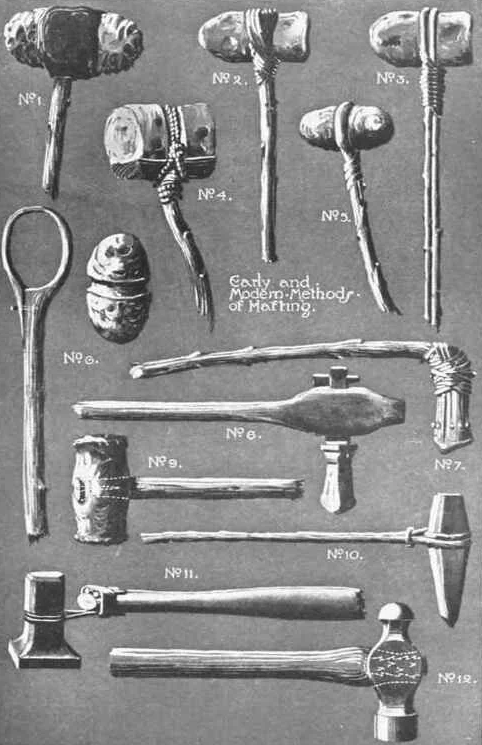
    Historical illustration of mallets and hammers

    The first real tool I ever bought was a Stiletto framing hammer. It retains a prized place in my heart and nail bags. Maybe, though, I was just harkening back to the deepest, most ancestral roots we have as humans, and that is our extraordinary love of hitting things with hard objects. The hammer specifically is the oldest tool in existence, dating back 3.3 million years (which is longer than modern humans have even been around, meaning other human species also used hammers). The concept is pretty simple and yet totally effective: blunt force with a blunt object to percuss another object. 

    The English word hammer is from the Old Norse word, hamarr. Hamarr means “tool with a stone head”, so it once again reminds us that we are historically subject to our most basic instincts to pick up stones and use them to pound things. Even if English didn’t specifically pick up the word from Old Norse, we could have also brought it in from Old Saxon hamur, Dutch hamer, Old High German hamar, or German Hammer. Take your pick. 

    The most famous hammer, of course, is Thor’s hammer, Mjølnir. On a side note, mjøl, which means crushed or ground wheat (and is the origin of the word “mill” or “miller”) may also be connected to the Latin word malleus, which is the root of the word mallet. 

    So that’s why we say “hammer”.

    A fun language lesson that should be easy enough:
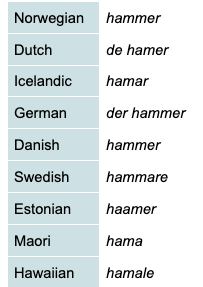
    One last thought is how we ourselves can get hammered, but a nail doesn’t get hammered. A nail gets nailed.

  • Why Do We Say Countertops

    Why Do We Say Countertops

    A friend and well-known carpenter asked, “why do we say countertops? What are they counter to? The wall?”

    English loves to take words that have different spellings and origins and just smush them up into the same word with the same spelling and go, “yeah, that should confuse the piss out of everyone who tries to learn this language.” Meaning, we can get a sentence like, “the Count counterintuitively counted on the countertop being done by now”. Go screw yourself, English.

    The word for “counter”, as in the thing that holds up almost every remodel job, comes from the Latin word computare, as in the root of the word “computer”, which means something or someone that calculates. It entered Old French sometime in the 1300s as contoeur (from comptoir), and was used to describe the table where sales and banking occurred, where things were counted by a counter. The counter (person) used the counter (object) to count upon.

    By the 1800s, English had respelled “counter” and generalized the term from a market or banking table to a general word to describe any surface upon which transactions occur, especially in supply stores. It’s where we get the terms “over the counter” and “under the counter”. It became common to refer to kitchens as having counters and then countertops by the early 1900s.

    Counter as in to be in opposition to something, comes from a different French word, contre, which means “against” (still does) from the Latin word contra (as in contradance, where dancers move towards and away from each other), which is different from the battle move of “countering” an attack, which comes from encounter. And a Count, as in the title of nobility, is from a different Latin root altogether and has nothing to do with either kitchens, banking, or battle moves (and instead is from the Latin word for “companion”).

    So that’s why we say countertops. The real question is why we added “tops” to the word. Open to ideas.

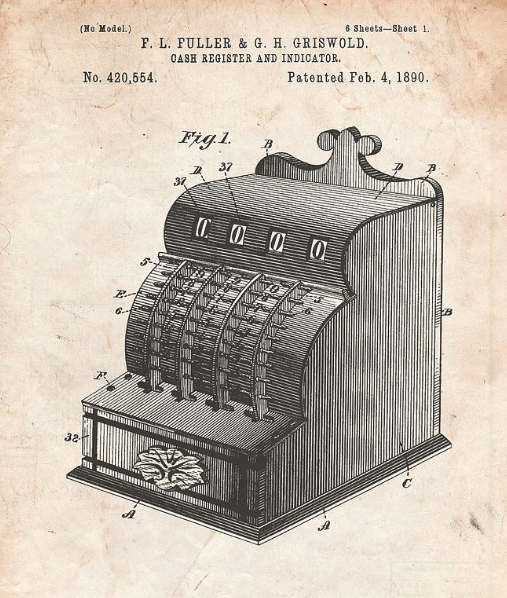
    1890 patent illustration of a mechanical cash register
  • How Much French Do You Already Speak?

    How Much French Do You Already Speak?

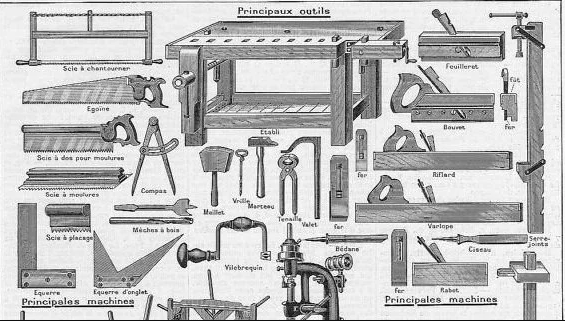
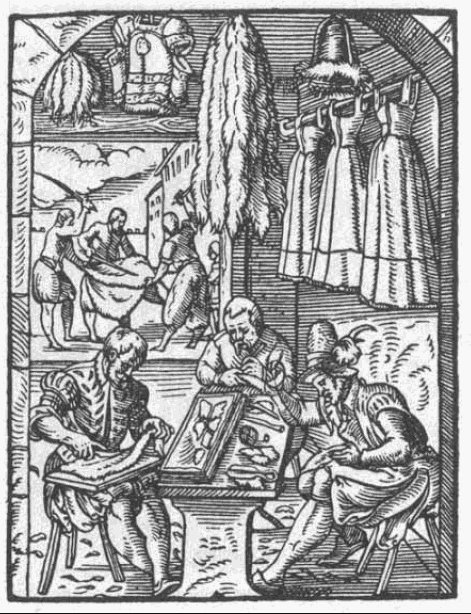
    Vintage French engraving of carpentry tools

    The Norman conquest had an enormous impact on the English language. French became the language of the ruling class while English withered away to almost near extinction. We retain that sense of classism in the history of our words. “Fancy” things use French words, “mundane” things use English words.

    Think of food: in English, the animal is one word, but when it’s cooked and served, it becomes another. A pig, cooked, becomes pork (French: porc). A sheep becomes mutton (mouton). A cow becomes beef (boeuf). To this day, we still think of French as the ooh la la so frickin’ fancy language, with a twinge of weird resentment.

    As a result of English cobbling together words from the languages of its ruling classes and conquerers, we actually speak a lot more French than we realize, especially in the trades.

    While this list is hardly complete, here’s a good starting point to see how much French you already have in your daily vocab on a jobsite. These aren’t words just with French roots—these are words that are actually still used in French as well (with very minor spelling differences). Pardon my French on the jobsite.

  • Why Do We Say Screw

    Why Do We Say Screw

    Vintage illustration of a pig

    Screw up, get screwed, screw someone over, screw the pooch, screw it. 

    Screw is such a delicious word because it’s both the verb and the noun, which we don’t always get the luxury of having in English: for example, we don’t hole our holes, we drill our holes; we don’t axe with our axe, we chop with our axe. But we do screw our screws. And screw and get screwed by a lot of other things too. 

    I had heard rumors about where this word comes from before, and I refused to believe it. It seemed too outrageous, too convenient. It also seemed strange that the French word for screw, which is vis, is totally unrelated to the word screw. Considering that, so far, the majority of our trades words come from a Gallo-Latin and Norman root, this added to my confusion. So before I tell you where the word screw comes from, let me say that I went down a lot of rabbit holes to put my doubts to rest, so in this one glorious instance, the rumors were true. 

    Pig dicks.

    That’s it. That’s where the word screw comes from. Pig. Dicks.

    Let’s see how we get there. 


    First of all, spoiler alert: this is not the only word we use in building that comes from female pig genitalia. I’ll leave you wondering what the other is. But in the case of screw, this comes from the Latin word scrofa, which essentially means…female pig parts. Now if you remember from your time on the farm, you’ll recall that male pig genitalia is corkscrewed, just like their freaky little tails, and therefore the assumption is that the receiving end of this bizarre wine-opener-penis would be shaped in the inverse. 

    Now to be fair, the ancient Romans and the romance languages that followed did NOT use scrofa to refer to a screw. Like the sweetly innocent people they are, they used the word vis, which comes from the Latin word for the twirly tendrils on grape vines (which look like pig penises) because of course the French would find a way to connect something to fine wine.

    No no, it was the Germans who took the word scrofa and ran with it. Considering the Germans usually have a word for everything, they probably were a little embarrassed that they didn’t have a specific word for pig vag and adopted the Latin word instead. From there, they made inferences, and to this day the German word for screw is Schraube. The joke caught on in the Germanic and Nordic languages, so they also adopted the word into their respective languages (skru in Norwegian, skruva in Swedish, skrúfa  in Icelandic) and in English, screw. 

    So, is this where we also get the connotation of “screw” as a sexual act? I can’t say for sure. I think humans will be humans and make sexual inferences from almost anything, and screwing a screw into wood is pretty low-hanging fruit. BUT–the word does make a huge difference. I don’t believe it’s as much of a double-entendre in French or Spanish, where the words aren’t connected to a sex act. 

    In conclusion, I hope when you use a corkscrew to open a bottle of wine, you will think of the etymological significance of both items–one being related to a pig prick, one being related to a grape vine–and appreciate that somehow they both ended up relating to the word for screw. 

    And that’s why we say screw. 


    Side note: this one took a lot of research just because it’s so insane. If you’d like to follow my tracks, I ended up deep in the German equivalent of the OED, the French wikipedia etymology page, and multiple Nordic-language sources: https://www.sprakradet.no/, http://no2014.uib.no/perl/ordbok/no2014.cgi, https://nordeniskolen.org/da/om-norden-i-skolen-siden/lydordbog/, http://no2014.uib.no/perl/ordbok/no2014.cgi


    Also, in case you weren’t fully convinced of my commitment to this issue, I also unfortunately looked up other animals that have corkscrew penises and the answer is ducks. Ew.

  • Why Do We Say Plumb

    Why Do We Say Plumb

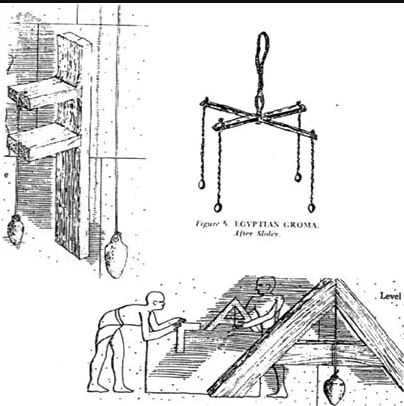
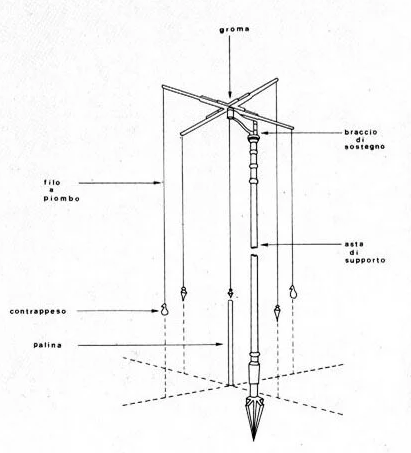
    Diagram of a traditional plumb bob

    Plumb is from the Latin word plumbum, and honestly if you’re not calling every plumber you know a plumbum I think you’re missing a pretty good crack.

    Plumbum means lead. Its first construction usage was in the use of lead weights connected to a string to find a perfectly vertical line, thanks to gravity. We still use this tool, which is a plumb bob. The “bob” part is a weird addition, since it means an up-and-down motion, but I guess it’s possible to make the case for it if you’re spending a lot of time reeling it up and dropping it down again. If you’re catching on to any fishing words in here, it’s because maritime terminology also uses plumb to refer to gauging the depth of water (“plumbing the depths”) using an almost identical process to a carpenter finding plumb. Fishing also uses plumb bob weights, which, of course, are small lead sinkers.

    Egyptian plumb bob

    A plumber (plombier in French), then, is someone who works with lead—which, historically, is the material used for pipes. The name stuck, and now anyone who works with pipes is called a plumber (fun side note, in Norwegian a plumber is a rørlegge, literally a pipe-placer). Luckily, our enhanced-belt-cleavage friends don’t have to work with much lead anymore, which is both great for their health and for their bottom line.

    So that’s why we say plumb.

  • Why Do We Say Truss

    Why Do We Say Truss

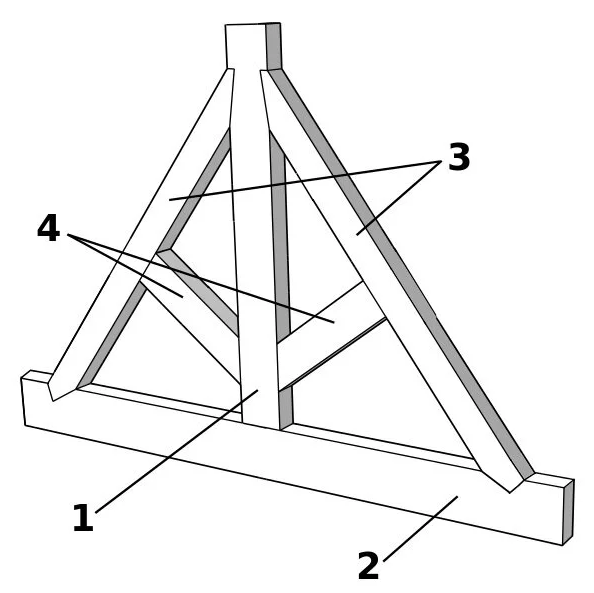
    Types of roof trusses

    Ask almost any kid to draw a house, and chances are it’s going to be a box with a triangle on top. The triangle, better known as a truss, is an intuitive architectural achievement that allows for large spans across the interior and weather-shedding on the exterior. It’s been in known use for over 4,000 years and we can only conjecture its use before then. We do know that the ancient Romans used trusses in both their buildings and bridges, and the oldest working monastery in the world, Saint Catherine’s in Egypt, still has a roof held up by the oldest king truss we know of, and was built in the mid-500s.

    At the time, the ancient Romans would have called this piece of roof system a torqueue, as in “torque” or “twisting.” It likely was referencing how trusses were attached to the rafters or top plates. Our main clue comes from what Middle English took from the French language to call it: trusser, which means “to bind, tie, or bundle.”

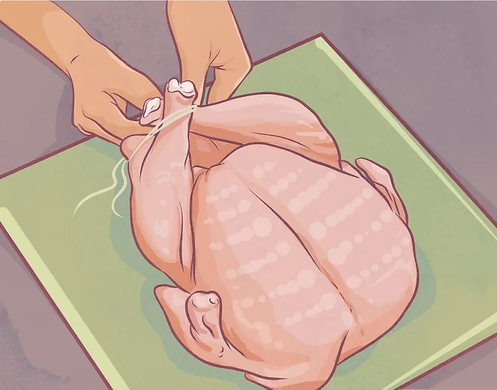
    While modern trusses do usually come in bundles, this term more likely evolved from the purpose of a truss, which is to structurally tie the walls and roof together. We also truss a turkey when we tie its little leg bones together. A bride can bring her trousseau with her, which was a bundle of her belongings; and we use a truss bandage to bind a hernia.

    Funny enough, the French language does not call a truss a truss, even though it’s her word originally. Instead, it is called a ferme (single truss) or a charpente (truss system). Note that a charpente is absolutely related to the word charpentièr, which is where English gets the word “carpenter”. Perhaps it’s because building a truss is something only a true master carpenter can accomplish? 😉

    So, that’s why we say truss.

  • Why Do We Say Furring Out

    Why Do We Say Furring Out

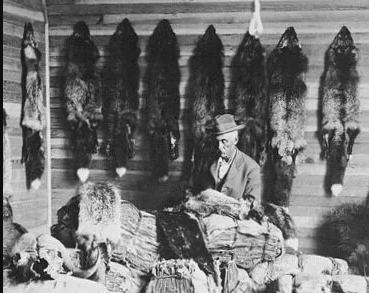
    Historical fur trader with animal pelts

    I once was reading over a daily log in which the carpenter wrote that his solution to a problem was to “fir out the wall”. He’s a smart guy who doesn’t usually make spelling errors. It struck me that thinking of this particular task in terms of wood made perfect sense—aren’t you literally adding spruce-pine-fir to an existing structure? 

    Furring out (yeah, bruh, it’s “fur”) is the act of adding extra wood to a structure to give it additional depth. It’s usually a 1×2 or 2×2 attached to the face of each stud to help make a wall flat, or make walls meet correctly, or to make room for something like a wire or pipe. We do it all the time in remodeling. But where does that term come from?  

    Back in the “old days”, when winter arrived, people would take their clothing to the furrier to get furred out. This meant attaching fur strips to the inside of a garment to give it extra warmth and depth. You’d get your skirt furred out, your coat furred out. It comes from the French word fourrer*, which means to line or sheath something.

    Carpentry adopted the term because the action and result was essentially the same. While no one was literally nailing furs to the studs, the concept of adding thickness with extra padding was easily conveyed by using the same term for both carpentry and clothing. Overtime, the clothing industry switched from saying “furring out” to “lining”. Carpentry has expanded the term, however, and it’s not uncommon to hear “furring in” or “furring down”. 

    Strangely, carpentry does *also* have the phrase to “line out” but its origin bears no relationship to clothing.

    So that’s why we say “furring out.”

    *fourrer in modern French slang also mean to sheath…um…something else.

  • Why Do We Say Balloon Framing?

    Why Do We Say Balloon Framing?

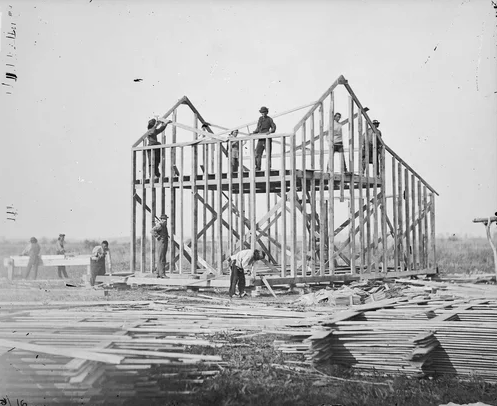
    Historical balloon framing construction

    If you ask a group of 10 carpenters how to build something, you’ll get 14 opinions. It’s not that there aren’t objectively right or wrong answers—a house must stand up straight and have walls, a floor, and a roof—but there are many ways to get there. When it comes to wood-built homes, however, we have a pretty clear Where-Why-How trajectory, and most of those ways make sense in their relative time and place. 

    There are two main ways to frame houses out of wood. The first style of wood homes is called post-and-beam, or timber-framed. It relies on the art of using strategic cuts in the wood to join everything together. If you’ve ever played with Lincoln Logs, you’ve already explored the concept of timber-framing. Whether in the rustic cabins of Norway or the elegant shoin zukuri buildings of Japan, timber-framing relies on two things: lush forests; and skilled carpenters. 

    The other way of framing a wood home is called stick-framing, and the name speaks for itself. It is a building method that, by using smaller wood “sticks” like 2x4s, specifically accounts for a *lack* of lush forests and skilled carpenters. Such was the case in a small French-dominated settlement in Missouri in the early 1830s. While it’s probable that this particular method of stick-framing was already being used in the bleak and willowy Plains, it was the French settlers who dubbed the new method maison en boulin. Maison en boulin translates to “scaffolding house”, with boulins being specifically the horizontal planks that connect to the vertical members.

    A maison en boulin (“may-zon on boo-lan”) is a descriptive term, since the bones of the house mimic scaffolding. An entire home can be constructed with a very small crew of semi-experienced semi-carpenters, using softwood lumber that could be quickly milled and easily transported, and pounded together with the newest innovation in construction technology: machine-made nails. This meant that homes could go up quickly, cheaply, and with minimal labor.

    Structurally, it is best envisioned as being like a bookshelf, or even just exactly like scaffolding, with long pieces of wood making up the sides and the “shelves” (floors) attached to the inside. In building terms, a maison en boulin is a stick-framed structure with continuous vertical members running from the bottom plate all the way to the uppermost top plate, with floor joists attached to a ledger or ribbon board that has been let-in or face-nailed to the interior of the studs. 

    This is called Balloon Framing. 

    Like so many words, especially in English, we embraced a mis-heard term and ran with it. By the time the city of Chicago adopted Balloon Framing as its principle means of new-and-quick housing construction for its–*ahem*–BALLOONING population in 1834, this particular style of framing had already been misnomered “Balloon Framing” by both the public and by city officials. The name was made into a running joke that the framework looked so light that it could float away like a balloon, or be popped as easily as one. 

    Sadly, and ironically, Balloon Framing did in fact turn out to be as fragile as its mis-spoken nomenclature. Because you could stand in the attic and drop a coin along the wall down to the basement, people soon realized that fire could travel up the same pathway.

    The Great Fire of Chicago, in which Balloon Framing (and touching eaves) led to the near-total destruction of the city, innovated stick-framing to become what it is today: western platform framing. Instead of homes being built like a bookshelf, homes became built more like a house of cards, with each floor separated by a floor system, and walls built from the 8’ studs that we all try to shove into the back of our sedans today. In most US cities, balloon framing is against code.

    So that’s why we say Balloon Framing.